
Red light therapy devices have moved out of the dermatologist's office and into homes everywhere, and two device formats lead the way: panels and masks. Both deliver the same core technology, therapeutic red and near-infrared wavelengths that work at the cellular level, but they're built for very different routines, body areas, and goals. If you're trying to decide between the two, the right answer depends less on which is "better" and more on what you actually want to treat.
At re-nū Smart Beauty, we carry both because they solve different problems. This guide breaks down how each one works, where it shines, and how to pick the format that fits your space, your skin, and your schedule.
How Red Light Therapy Works
Red light therapy uses specific wavelengths of light to stimulate activity in your cells. Red light, typically around 660nm, is absorbed near the surface of the skin, where it supports collagen production, improves tone, and helps reduce the look of fine lines. Near-infrared light, around 850nm, penetrates deeper into muscle and joint tissue, where it promotes circulation and eases inflammation.
The science is the same whether the light comes from a panel or a mask. What changes is coverage area, intensity, and how the device fits into your day. That's where the panel-versus-mask decision really gets made.
Red Light Therapy Panels: Power and Full-Body Versatility
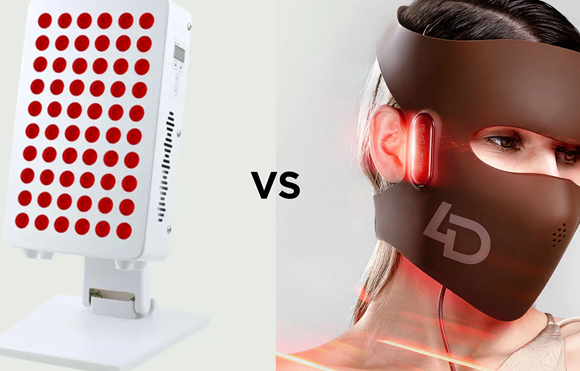
Red light therapy panels are often considered the workhorses of at-home light therapy. They project a wide, high-intensity field of light that you sit or stand in front of, treating large areas of the body in a single session.
Our LED Therapy Panel with Adjustable Stand and tabletop red light panel both combine 660nm red and 850nm near-infrared wavelengths, so you get surface-level skin benefits and deeper tissue support from one device.
Where panels stand out:
- Full-body coverage. A panel can treat your face, chest, back, shoulders, or legs without repositioning a wearable device over and over. Position yourself 6 to 12 inches away and the light field does the rest.
- Dual-wavelength depth. Because panels run both red and near-infrared light, they reach beyond the skin into muscles and joints, making them genuinely versatile.
- Pain and recovery support. This is the panel's signature advantage. Athletes, people managing arthritis or back pain, and anyone recovering from daily strain use panels to increase circulation and reduce inflammation at the source.
- Hands-free customization. With a touchscreen and remote control, you can switch between red, near-infrared, or combined modes and set a session timer so you never overdo it.
Best use cases for panels: post-workout muscle recovery, joint and back discomfort, larger treatment areas, and anyone who wants one device that handles both skincare and body wellness. A typical session runs 10 to 20 minutes per area, three to five times a week.
The trade-off is that panels are stationary. You need a flat surface and a few minutes of sitting still, which is easy at home but not something you'll do on the move.
Red Light Therapy Masks: Targeted, Hands-Free Skincare
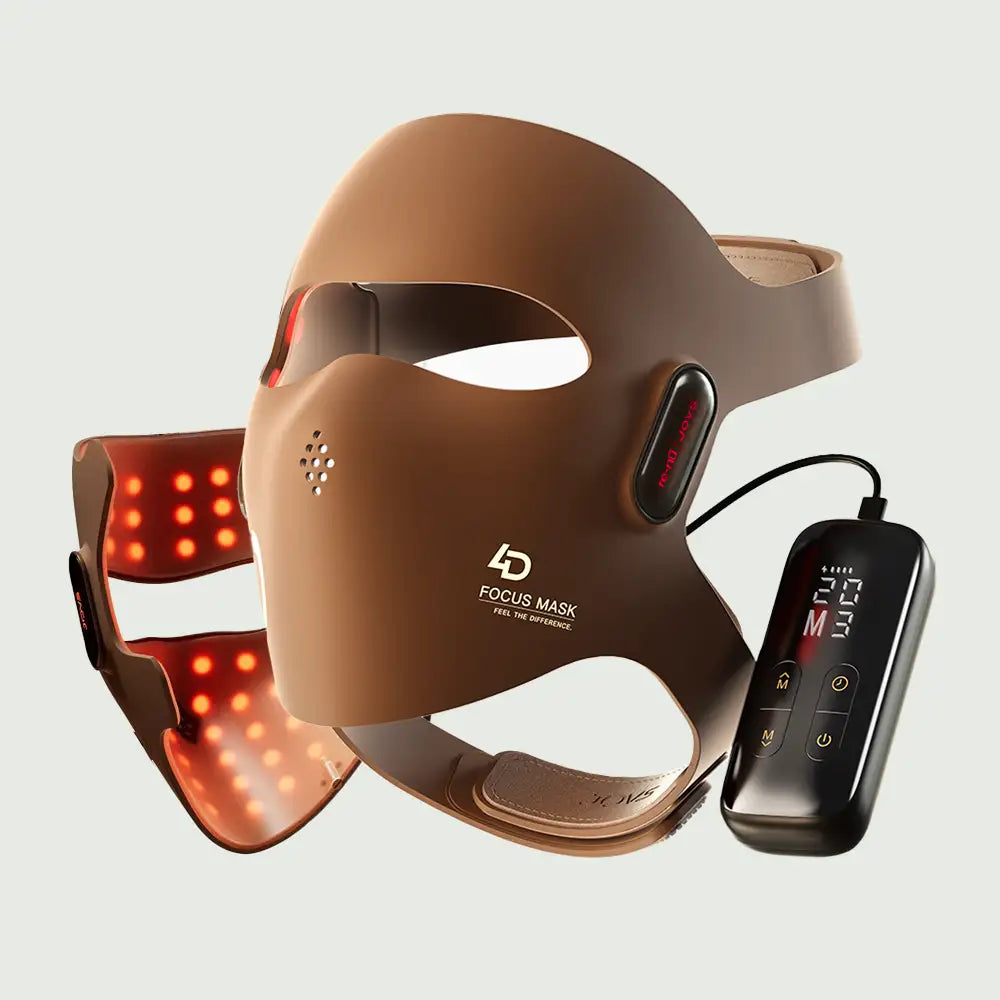
Masks take a different approach. Instead of a panel you sit in front of, a mask molds to the contours of your face and delivers light directly to your skin while you go about your routine. Our lineup includes a variety of different masks that utilize red light therapy, including our 4D laser light therapy mask.
Where masks stand out:
- Perfect facial fit. A mask contours to your cheeks, forehead, and jawline, so every part of your face gets consistent exposure, including areas a flat panel can miss.
- Truly hands-free. Once it's on, you can relax, read, or move around the house. There's no holding a position or staying a set distance away.
- Multi-color targeting. Beyond red light, color masks add blue light to fight breakouts, plus additional wavelengths for pigmentation and tone, letting you customize treatment to your skin's needs.
- Routine-friendly. Masks slot neatly into an existing skincare regimen. Cleanse, put the mask on for a few minutes, then continue with serums and moisturizer.
Best use cases for masks: facial anti-aging, acne and breakout control, uneven tone or pigmentation, and anyone who wants focused skincare without committing to a stationary setup. The convenience factor matters more than it sounds, because consistency is what drives results, and a device you'll actually use every day beats a more powerful one you skip.
The limitation is scope. A mask is built for the face. It won't help with a sore lower back or post-run leg recovery.
Panels vs Masks: Key Differences at a Glance
Red Light Panels
- Coverage: Full body and large treatment areas
- Wavelengths: Red (660nm) plus near-infrared (850nm)
- Best for: Pain relief, muscle recovery, and combined body and skin support
- Position: Stationary, with you sitting or standing nearby
- Mobility: Used in a fixed location on a flat surface
LED Masks
- Coverage: Face only, contoured for even exposure
- Wavelengths: Multi-color, including red, blue, and additional tones
- Best for: Facial skincare, acne control, and anti-aging
- Position: Wearable and fully hands-free
- Mobility: Move freely around the house while wearing it
Which One Should You Choose?
Choose a panel if your goals extend beyond your face, if you want to address muscle soreness or joint discomfort, or if you'd rather invest in one versatile device for the whole household. The dual-wavelength output and wide coverage make panels the more flexible long-term tool.
Choose a mask if your focus is facial skincare, your priority is convenience, or you want targeted color therapy for acne, fine lines, and tone. A mask's hands-free design makes it far easier to stay consistent, which is the real key to visible change.
Can You Use Both?
Absolutely, and many people do. A panel handles full-body recovery and broad skin support, while a mask delivers precise, multi-color treatment to the face. Used together, they cover nearly every red light therapy goal from head to toe. Our devices are designed to work alongside one another so you can build a complete at-home routine.
Red Light Therapy Masks and Panels: Frequently Asked Questions
How often should I use red light therapy? Most people see the best results with consistent sessions of around 10 to 20 minutes, three to five times per week. Daily use is fine for masks, since exposure times are short.
Are panels stronger than masks? Panels generally deliver higher intensity over a larger area and include near-infrared light for deeper penetration. Masks prioritize even facial coverage and color variety over raw power.
Do I need both red and near-infrared light? Red light targets the skin's surface, while near-infrared reaches muscles and joints. If you want both skincare and body benefits, look for a device that offers both, like our dual-wavelength panels.
How long until I see results? Light therapy is cumulative. Skin texture and tone often improve over several weeks of consistent use, while recovery and circulation benefits can be felt sooner.
Whether you lead with a panel, a mask, or both, the most important factor is sticking with it. Explore the full lineup of red light therapy devices here at re-nū Smart Beauty to find the format that fits your routine and your goals.