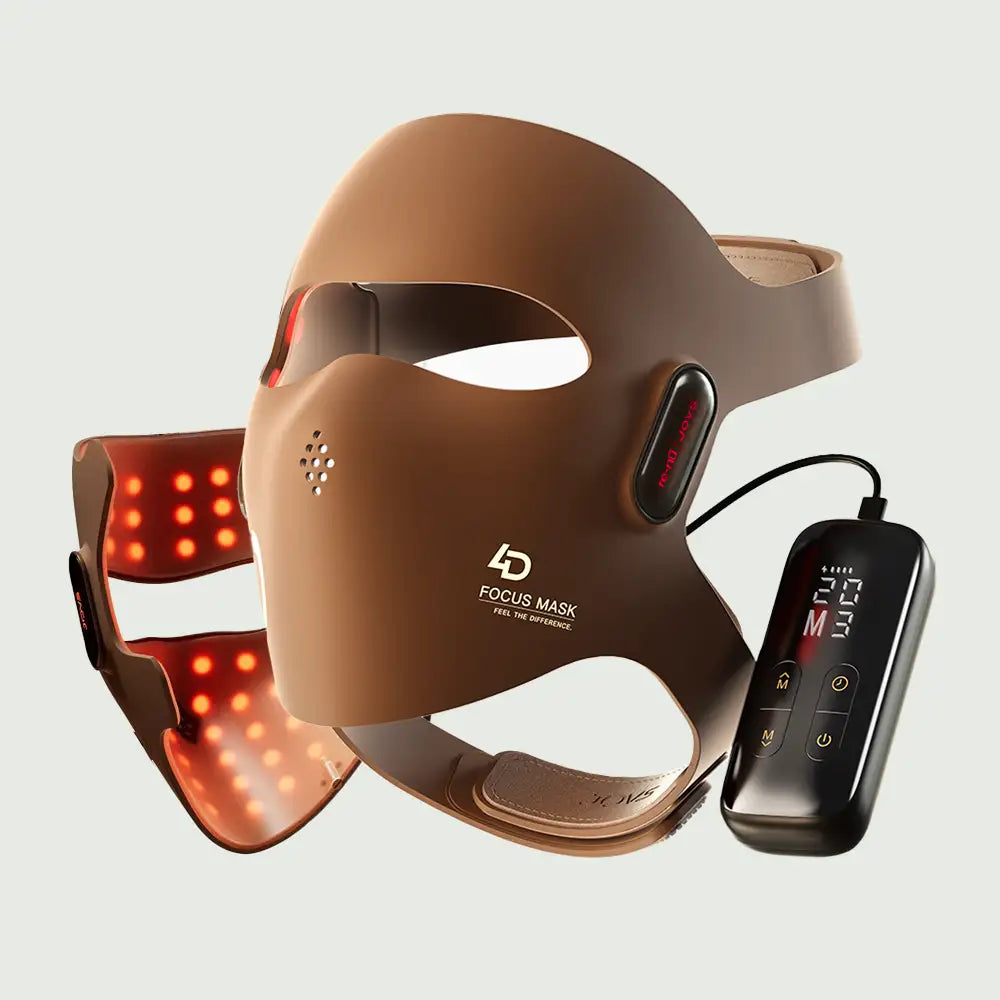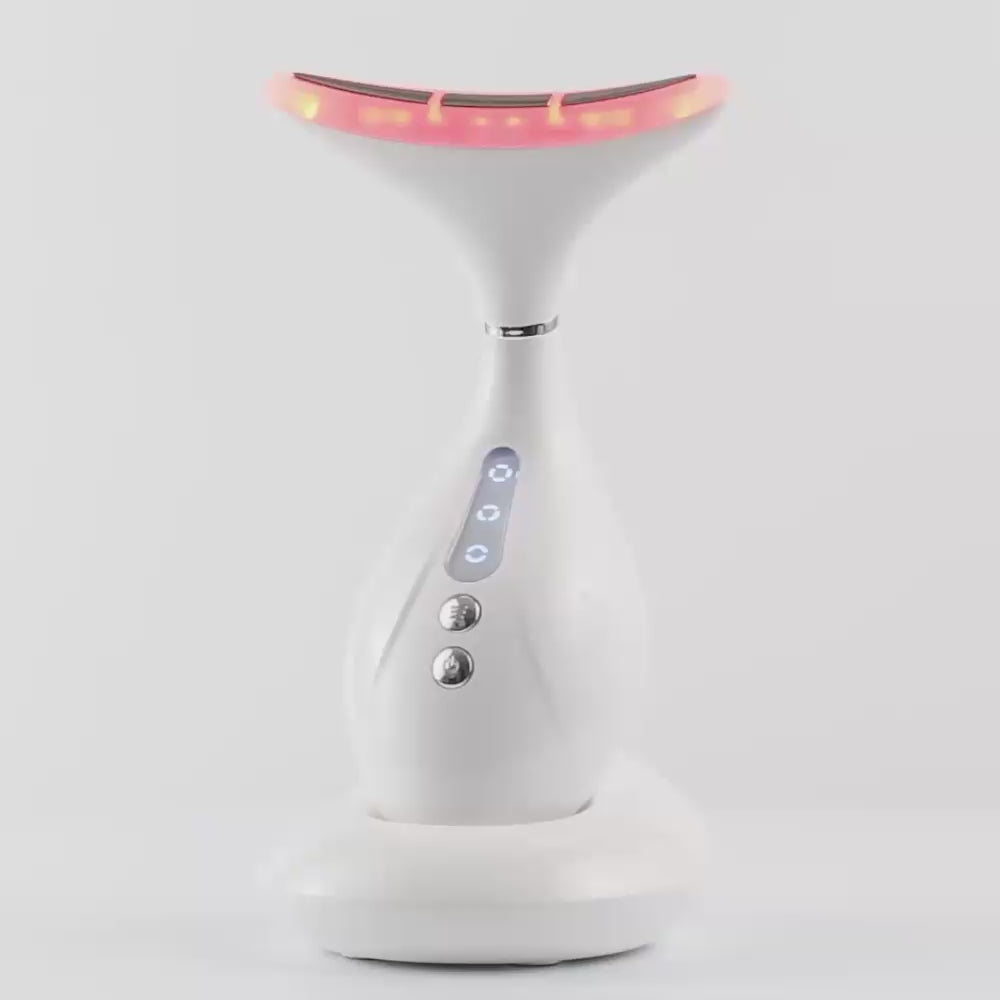

If you've shopped for an LED device lately, you've seen the numbers everywhere: 630nm, 660nm, 850nm. Those figures aren't just decoration, they're the single most important spec on the box. The wavelength a device emits determines how deep the light travels, which cells it reaches, and ultimately what results you can expect. At re-nū Smart Beauty, every panel, mask, torch, and cap we offer is engineered around specific wavelengths chosen for a specific job.
Here's a guide to understanding red light wavelengths and the science of red light therapy:
Why wavelength matters more than brightness
Light energy is measured in nanometers (nm), and each wavelength penetrates the body to a different depth. Shorter wavelengths in the blue range stay near the surface of the skin. Longer wavelengths in the red and near-infrared range travel deeper, reaching the dermis, muscle, and even hair follicles. This is why a one-size-fits-all light doesn't exist — clearing a breakout and easing joint stiffness require energy delivered to completely different depths.
The mechanism behind the results is called photobiomodulation. When the right wavelength reaches your cells, it's absorbed by the mitochondria, the energy factories inside each cell, which respond by producing more ATP. More cellular energy means faster repair, more collagen, reduced inflammation, and better circulation. Choosing the correct wavelength is simply choosing where in the body you want that boost to happen.
How to Read a Red light Therapy Wavelength Chart
Use this red light therapy wavelength chart guide as a quick reference for what each band does and where it works best.
Blue light — 415–450 nm
- Penetration depth: surface (epidermis)
- Primary targets: acne-causing bacteria and oil glands
- Best for: breakouts, blemishes, oily skin
Green light — 525–560 nm
- Penetration depth: shallow
- Primary targets: melanocytes and pigment
- Best for: dark spots, uneven tone, redness
Amber / orange light — 600–620 nm
- Penetration depth: shallow to medium
- Primary targets: sensitive surface tissue
- Best for: calming, sensitivity, general glow
Red light — 630 nm
- Penetration depth: medium (upper dermis)
- Primary targets: fibroblasts and fine lines
- Best for: surface texture, tone, fine lines
Red light — 660 nm
- Penetration depth: medium-deep (dermis)
- Primary targets: collagen and elastin
- Best for: wrinkles, firmness, healing, hair
Near-infrared (NIR) — 810–830 nm
- Penetration depth: deep
- Primary targets: muscle and deeper tissue
- Best for: recovery, circulation, inflammation
Near-infrared (NIR) — 850 nm
- Penetration depth: deepest
- Primary targets: muscle, joints, follicles
- Best for: pain, recovery, deep rejuvenation, hair growth
Blue light: the surface specialist
Blue light, roughly 415–450nm, doesn't travel far, and that's exactly the point. It works on the surface of the skin where acne-causing bacteria live, neutralizing them and helping calm active breakouts before they spread. It's the wavelength behind our Smart LED Patches and the blue mode on the re-nū Red Light Torch, making it the go-to choice for anyone managing blemish-prone or oily skin.
Red light (630–660nm): the collagen builders
This is the heart of red light therapy and the wavelength range most people picture when they hear the term. Red light in the 630 to 660nm band penetrates into the dermis, where it stimulates fibroblasts, the cells responsible for producing collagen and elastin. The red light therapy wavelength benefits here are the ones you can see in the mirror over time: firmer skin, softened fine lines, more even tone, reduced redness, and a healthier overall glow.
660nm specifically is one of the most studied and effective wavelengths for skin rejuvenation, which is why it anchors so much of our lineup, from the UltraThin LED Red Light Panel to the Red Light Therapy Cap and the 360 LED Red Light Therapy Belt. If your goal is smoother, more youthful-looking skin, this is the band doing the heavy lifting.
Near-infrared (810–850nm): the deep worker
Near-infrared light is invisible to the eye, but it reaches further into the body than any other therapeutic wavelength. At 850nm, the energy travels past the skin's surface into muscle, joints, and follicles, where it supports recovery, eases inflammation, improves circulation, and accelerates cellular repair. This is the wavelength people reach for after a workout, for lingering aches, and for deeper, longer-term skin renewal that surface light can't address alone.
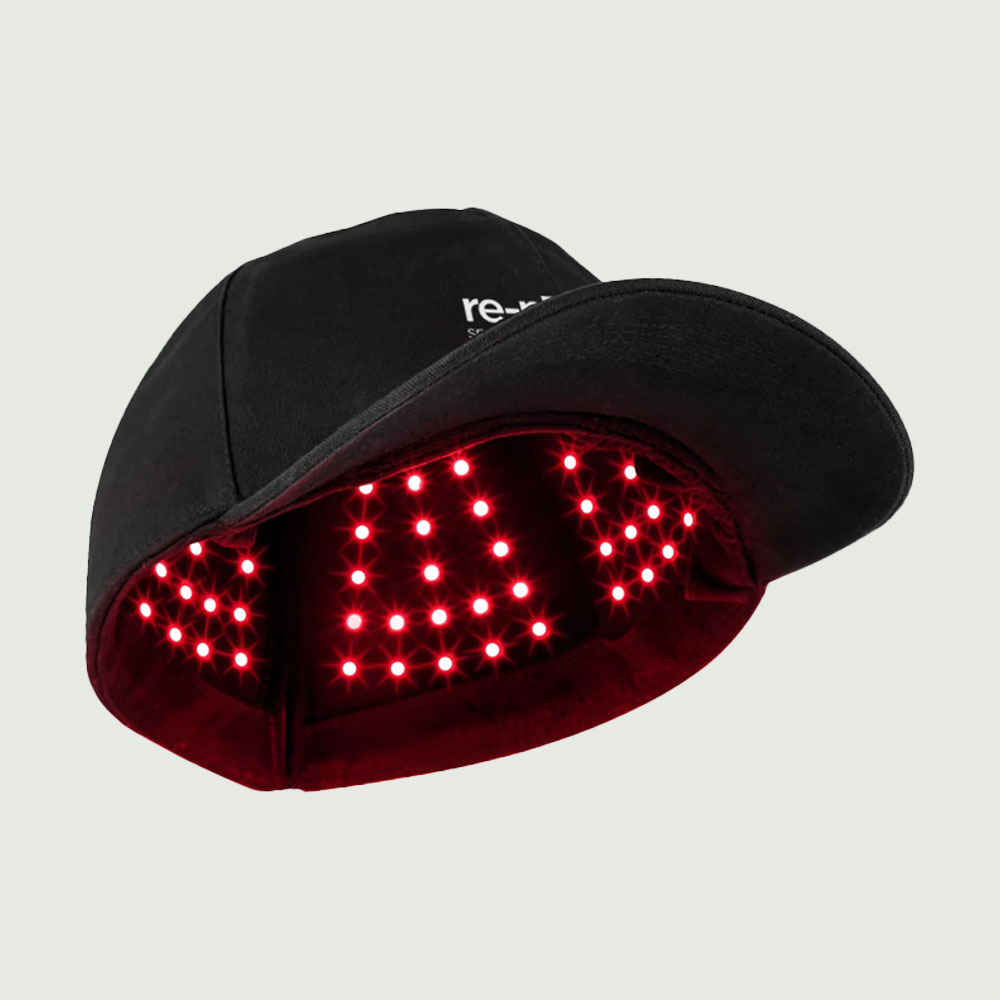
Near-infrared is also a key player in hair growth. Our Red Light Therapy Cap pairs 660nm and 850nm precisely because the deeper near-infrared energy reaches the follicle while red light supports scalp health, a combination designed to encourage thicker, fuller hair.
Why the 660nm + 850nm combination wins
Most quality red light therapy devices don't rely on a single wavelength, and for good reason. Red and near-infrared light work on different layers, so combining them treats your skin and tissue top to bottom in one session. Our 360 LED Red Light Therapy Belt uses a deliberate 1:2 ratio of 660nm to 850nm, meaning more deep-penetrating near-infrared light balanced against surface-level red, to deliver both visible skin benefits and deeper recovery support at the same time.
That's the principle behind nearly every re-nū device: pair the wavelengths that complement each other, calibrate the ratio, and let the light reach every layer it needs to.
How to choose the right wavelength for your goals
The simplest way to shop is to start with your goal and work backward to the wavelength:
- Acne and breakouts: blue light (around 415–450nm), found in our Smart LED Patches and the Torch's blue mode.
- Fine lines, tone, and firmness: red light (630–660nm), the core of our UltraThin Panel and most facial devices.
- Recovery, pain, and deep rejuvenation: near-infrared (810–850nm), best delivered through our panels and the Red Light Therapy Belt.
- Hair growth: a 660nm + 850nm combination, built into the Red Light Therapy Cap.
- Everything at once: a multi-wavelength device that layers red, near-infrared, and blue.
Find the Right Light Therapy Device For You
Wavelength is the language of light therapy. Once you understand that blue stays on the surface, red builds collagen in the dermis, and near-infrared works deepest of all, choosing a device stops being guesswork. At re-nū Smart Beauty, we engineer every product around clinically meaningful wavelengths (most often 660nm and 850nm) so the light you're using is actually reaching the cells you want to treat.
Ready to put the right wavelength to work? Explore our full range of red light therapy devices and find the one that matches your goals.